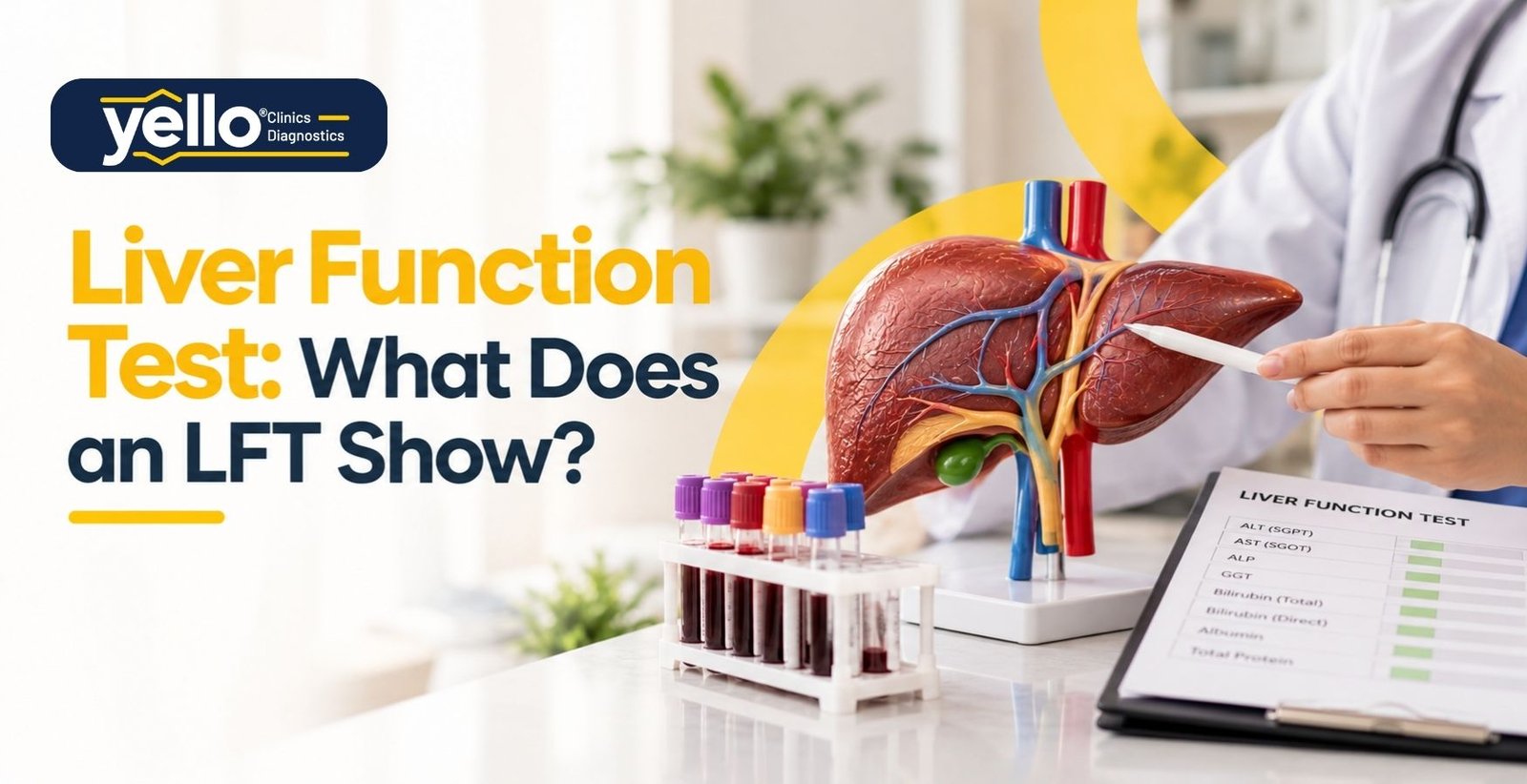
The liver performs several important functions, including helping process nutrients, producing proteins, supporting digestion, and breaking down substances in the body. When there is a concern about liver health, a healthcare professional may recommend a Liver Function Test (LFT).
An LFT test is a group of blood tests that measures different substances and enzymes in the blood. These results can provide useful information about liver health and may help healthcare professionals investigate symptoms, monitor certain conditions, or assess the effects of medications.
But what exactly does an LFT show? Which tests are included, and when should you consider getting a liver function test?
Let’s understand the basics.
What Is a Liver Function Test?
A Liver Function Test (LFT) is a blood test panel used to assess different aspects of liver health.
An LFT does not measure a single function of the liver. Instead, it typically includes several blood measurements that can provide information about:
- Liver cell injury
- Bile flow
- Protein production
- Bilirubin processing
- Other aspects of liver function
The exact components of an LFT blood test can vary between laboratories and test panels.
What Does an LFT Test Measure?
A typical liver function test may include several markers.
1. ALT
Alanine aminotransferase (ALT) is an enzyme found mainly in liver cells.
Higher-than-normal ALT levels can occur when liver cells are damaged. However, an elevated ALT level does not by itself identify the exact cause of liver injury.
2. AST
Aspartate aminotransferase (AST) is another enzyme that can be measured as part of an LFT.
AST is present in the liver as well as other tissues, including muscles. Therefore, an elevated AST level needs to be interpreted alongside other test results and the person’s clinical history.
3. ALP
Alkaline phosphatase (ALP) is an enzyme associated with the liver, bile ducts, and bones.
Higher ALP levels can occur with certain liver or bile duct conditions, but they can also be associated with other conditions.
4. Bilirubin
Bilirubin is produced when red blood cells are broken down.
The liver processes bilirubin and helps remove it from the body. Higher bilirubin levels can sometimes contribute to yellowing of the skin or eyes, known as jaundice.
5. Albumin
Albumin is a protein produced by the liver.
Albumin levels can provide information about the body’s protein status and the liver’s protein-producing capacity. However, low albumin can have several possible causes and should not be interpreted as evidence of liver disease on its own.
6. Total Protein
A liver panel may also include total protein, which measures the overall amount of certain proteins in the blood.
Together with albumin and other measurements, it can provide additional information when evaluating liver health.
Why Is a Liver Function Test Done?
A healthcare professional may recommend an LFT test for several reasons.
Investigating Symptoms
Liver testing may be considered when someone has symptoms that could be associated with liver or bile duct problems.
Possible symptoms include:
- Yellowing of the skin or eyes
- Dark urine
- Unusual tiredness
- Loss of appetite
- Nausea or vomiting
- Abdominal discomfort
- Itching
- Swelling in the abdomen or legs
These symptoms can have many causes, so an LFT alone cannot determine the underlying condition.
Monitoring a Known Liver Condition
People who have been diagnosed with certain liver conditions may require periodic liver function tests to monitor their health.
The frequency of testing depends on the condition and the healthcare professional’s recommendations.
Monitoring Certain Medicines
Some medicines can affect liver enzymes. Depending on the medication and individual circumstances, a healthcare professional may recommend an LFT to monitor liver-related blood markers.
Do not stop or change prescribed medication based on an LFT result without medical advice.
Assessing Overall Health
An LFT may sometimes be included as part of a broader health assessment, particularly when there are relevant risk factors or clinical concerns.
What Are the Symptoms That May Lead to an LFT?
Many liver conditions may not cause obvious symptoms in their early stages. When symptoms do occur, they can vary depending on the underlying cause.
A healthcare professional may consider an LFT blood test if you experience:
Persistent Fatigue
Unexplained tiredness can have many causes. Liver-related conditions are one possible cause that may be considered depending on other symptoms and medical history.
Yellow Eyes or Skin
Yellowing of the skin or whites of the eyes can occur when bilirubin levels become elevated.
This should be medically evaluated rather than diagnosed through an LFT alone.
Dark-Coloured Urine
Changes in urine colour can have several causes. Dark urine alongside jaundice or other symptoms may warrant medical assessment.
Abdominal Discomfort
Pain or discomfort in the upper right area of the abdomen can sometimes be associated with liver or gallbladder problems.
Persistent abdominal symptoms should be evaluated by a healthcare professional.
Loss of Appetite or Nausea
Changes in appetite and nausea are non-specific symptoms that can occur with many conditions. Depending on the overall clinical picture, a healthcare professional may recommend liver testing.
What Do LFT Results Mean?
An LFT result should not be interpreted by looking at one value alone.
Healthcare professionals generally consider several markers together, along with:
- Symptoms
- Medical history
- Physical examination
- Medicines and supplements
- Previous test results
- Other laboratory or imaging investigations
For example, an elevated ALT may indicate liver cell injury, but it does not identify the specific cause.
Similarly, an abnormal bilirubin level can have multiple possible explanations.
What Is the Normal Range for an LFT?
There is no single LFT normal range that applies to every laboratory.
Reference ranges can vary depending on the laboratory, testing method, age, sex, and other factors.
Always use the reference range provided on your laboratory report and discuss abnormal results with a qualified healthcare professional.
An abnormal liver test does not automatically mean that you have liver disease.
Does an LFT Diagnose Liver Disease?
An LFT can provide important information about liver health, but it generally cannot identify the exact cause of an abnormal result by itself.
If your results are outside the laboratory’s reference range, your healthcare professional may recommend additional evaluation.
Depending on the situation, this could include:
- Repeat blood testing
- Additional blood tests
- Ultrasound
- Other imaging tests
- Review of medicines and supplements
- Further clinical evaluation
The appropriate next step depends on the individual’s symptoms and medical history.
How to Prepare for a Liver Function Test
Preparation requirements can vary depending on the LFT panel and whether other tests are being performed at the same time.
Before your liver function test:
- Follow the instructions provided by your diagnostic centre.
- Ask whether fasting is required.
- Inform the healthcare professional about medicines and supplements you take.
- Do not stop prescribed medicines unless specifically advised.
- Follow any instructions regarding food, drinks, or other preparations.
If you are having several blood tests together, the preparation requirements may be based on the complete test panel.
Does an LFT Require Fasting?
Not every liver function test requires fasting.
However, fasting may be recommended depending on the specific tests ordered or if an LFT is being performed alongside other investigations.
Confirm the preparation requirements with your healthcare professional or diagnostic centre before your appointment.
How Is a Liver Function Test Done?
An LFT blood test is performed using a blood sample.
The process generally involves:
- A healthcare professional identifies the required test.
- A trained phlebotomist collects a blood sample.
- The sample is properly labelled and transported for laboratory analysis.
- The laboratory analyses the sample.
- The results are provided in a laboratory report.
- A healthcare professional interprets the results in the context of your health.
The actual blood collection usually takes only a short time.
How Often Should You Get a Liver Function Test?
There is no universal schedule for getting an LFT.
Your healthcare professional may recommend testing based on:
- Existing liver conditions
- Medicines you are taking
- Previous abnormal results
- Symptoms
- Other medical conditions
- Relevant risk factors
People who are being monitored for a known condition may need testing at intervals recommended by their healthcare professional.
Routine testing should be based on individual healthcare needs rather than a fixed schedule for everyone.
Can You Get an LFT at Home?
Yes, some diagnostic centres provide home blood sample collection for liver function testing.
Home collection can be convenient for people who have difficulty travelling to a diagnostic centre or prefer to have routine blood samples collected at home.
If you are considering an LFT test at home, confirm that the specific LFT panel you require is available for home collection and check whether any preparation is necessary.
Liver Function Test in Hyderabad
If you are looking for a liver function test in Hyderabad, Yello Medi provides pathology and diagnostic testing services.
Patients in Kokapet and nearby areas can access laboratory testing based on the tests recommended by their healthcare professional.
Yello Medi also provides home blood sample collection for several laboratory investigations, offering an option for people who prefer doorstep sample collection.
Before booking an LFT, confirm the specific test panel required and any preparation instructions.
How to Choose a Diagnostic Centre for an LFT
When choosing a diagnostic centre for a liver function test, consider:
Test Availability
Confirm that the laboratory offers the exact LFT panel recommended for you.
Sample Collection
Check whether the centre provides convenient sample collection options, including home collection where available.
Report Timelines
Ask when the test report is expected to be available.
Sample Handling
Proper blood collection, identification, storage, and transportation are important for laboratory testing.
Professional Support
If you have questions about preparation or understanding your report, seek guidance from a qualified healthcare professional.
Conclusion
A Liver Function Test (LFT) is a group of blood tests that provides information about different aspects of liver health. It may include measurements such as ALT, AST, ALP, bilirubin, albumin, and total protein.
An abnormal LFT does not automatically mean that you have liver disease, and individual results should always be interpreted alongside your symptoms, medical history, and other investigations.
If your healthcare professional has recommended an LFT blood test, follow the preparation instructions provided by your diagnostic centre and discuss your results with a qualified healthcare professional.
Frequently Asked Questions (FAQs)
What is an LFT test?
LFT stands for Liver Function Test. It is a group of blood tests that measures substances such as liver enzymes, bilirubin, and proteins to provide information about liver health.
What does an LFT show?
An LFT can provide information about possible liver cell injury, bile flow, bilirubin processing, and aspects of the liver’s protein-producing function. It cannot determine the exact cause of an abnormal result on its own.
Is an LFT a blood test?
Yes. A liver function test is performed using a blood sample.
Does an LFT require fasting?
Not necessarily. Fasting requirements depend on the specific tests being performed. Check the instructions provided by your healthcare professional or diagnostic centre.
What is the normal range for an LFT?
There is no single normal range for every LFT. Reference ranges vary between laboratories and testing methods. Your report will provide the relevant reference range.
Can an LFT detect fatty liver?
An LFT may show abnormal liver enzymes in some people with fatty liver, but liver enzymes can also be normal. An LFT alone cannot diagnose or rule out fatty liver. Imaging or other evaluation may be required depending on the clinical situation.
Can an LFT detect hepatitis?
LFT results can show changes associated with liver inflammation or injury, but they do not by themselves confirm a specific hepatitis infection. Specific tests may be needed to diagnose viral hepatitis.
Can I get an LFT at home?
Some diagnostic centres offer home blood sample collection for LFTs. Availability depends on the laboratory and the specific test panel.
When should I see a doctor about an abnormal LFT?
If your liver test results are outside the laboratory’s reference range, discuss them with a healthcare professional. They can determine whether repeat testing or additional investigations are required.