
You get your blood test results back, and you see “MPV” listed there. What is that? You Google it, read some scary medical websites, and all of a sudden you feel anxious. When they look at their blood test reports and see the word MPV, they become confused because it sounds like medical terms that only doctors understand.
Here’s the reality: MPV is part of a CBC blood test and helps evaluate platelet size and overall health. It’s simpler than you think, and honestly, most of the time abnormal mpv blood test results aren’t serious. But here’s the thing: abnormal MPV levels don’t always indicate a serious medical condition, but you should understand them correctly instead of just worrying unnecessarily.
This guide explains what MPV actually means, what high MPV levels mean, what low MPV blood test results mean, and when you actually need to worry versus when it’s probably nothing. By the end, you’ll understand your mpv blood test results instead of panicking about them.
What Is MPV in a Blood Test?
MPV means Mean Platelet Volume, simply put; it refers to how big your platelets are. It is really easy to interpret an mpv blood test since it shows how platelets function inside your body.
Platelets are substances that allow your blood to clot. That is why their size and activity matter more than people think, because when you get a cut, they jump in to stop the bleeding.
An mpv blood test gives doctors a clue about this. Bigger platelets generally are newer and more active whereas small platelets may indicate a problem as seen in the case of an MPV low blood test.
It is generally conducted along with a CBC blood test which checks the general condition of your blood providing a better picture of your inner body state.
Why Is MPV Important?
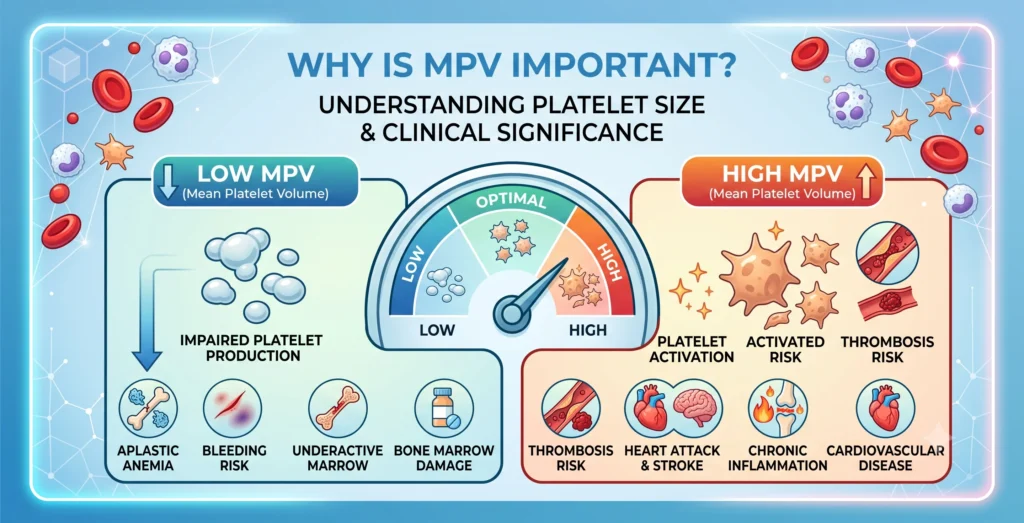
Platelets have the task of clotting your blood; therefore, they are activated in case you get an injury. That is basically it, however, it plays a vital role in your health.
This is precisely why a mpv blood test is so crucial. It informs medical professionals about your platelets’ activity level and may reveal some hidden illnesses or problems. Sometimes, patterns seen in a low MPV blood test can point to underlying issues.
Doctors don’t just look at this alone, they read your mpv blood test along with other values in a CBC blood test to understand what’s really going on in your body.
What Is the Normal MPV Range?
The normal value for an MPV blood test should be between 7.4 fL and 10.4 fL, but the catch here is that this range varies. The different laboratories have different standards that can lead to some variation in reference values. That’s why it’s important to always check the range mentioned on your own report.
For example, a value like 7.2 could be marked slightly low in one lab and completely normal in another, sometimes even showing up under a low MPV blood test category depending on their scale.
Also, your results should never be looked at alone. Doctors always read your mpv blood test along with other blood parameters and your overall health, because one number by itself doesn’t tell the full story.
What Does High MPV Mean?
High levels of MPV in your mpv blood test report are indicative that your platelets are above average in size. High MPV levels may be due to several things:
Your high MPV levels might indicate:
- Inflammation somewhere in your body that’s triggering platelet production
- Vitamin B12 or folate deficiency causing larger platelets
- Thyroid disorders affecting platelet size
- Stress putting strain on your bone marrow
- Recovery after significant blood loss
- Lifestyle factors like smoking or alcohol consumption
- Medications you’re taking
High MPV levels don’t automatically mean something’s wrong. Your bone marrow might simply be producing larger platelets as a normal response to your body’s needs. Doctors usually review this along with your CBC blood test results.
Symptoms That May Be Associated With High MPV
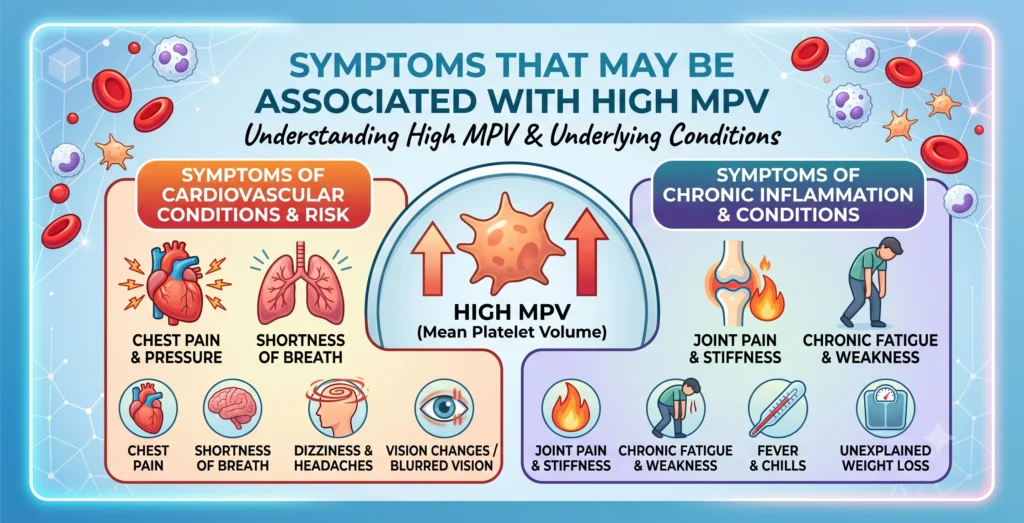
Sometimes high MPV levels come with symptoms:
Fatigue: You just feel tired all the time, even when you’ve rested enough, your energy feels off. High MPV levels along with deficiencies may also contribute.
Weakness: You have a sense of sluggishness in the body, and normal activities suddenly become tiring.
Dizziness: The feeling of dizziness particularly on rising abruptly from a sitting position.
Headaches: Persistent headaches which do not seem to be alleviated.
Chest discomfort: This feeling of heaviness or discomfort that makes you feel concerned.
Low energy: This is generally related to lethargy but a feeling of lack of energy during the entire day.
Note: These symptoms are not directly related to high MPV possible causes. There are many causes for it, so it’s best to go talk with a doctor and get your CBC blood test done instead of assuming anything.
What Does Low MPV Mean?
When your mpv blood test shows low MPV blood test results, it means your platelets are smaller than average, and that can happen for a few different reasons:
Your low MPV blood test might result from:
- Viral infections affecting platelet production
- Chronic inflammation in your body
- Autoimmune conditions attacking your blood cells
- Certain medications affecting platelet size
- Bone marrow disorders or conditions
- Severe stress on your bone marrow
Although low MPV blood test values are generally less of a concern, high values should not be ignored either as long as the number is far from normal. This is usually looked at with your CBC blood test, which helps doctors understand what’s actually going on.
Symptoms That May Be Associated With Low MPV
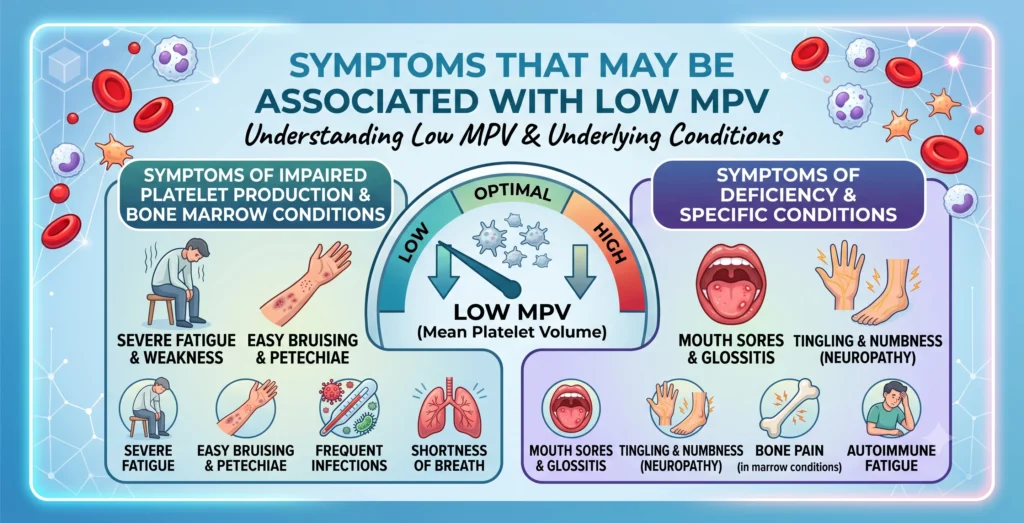
Your low MPV blood test might come with these symptoms:
Easy bruising: You will have purple blotches where even the slightest nudge or bump happens.
Gums that Bleed: Your gums begin bleeding during brushing of teeth.
Weak immunity: You are falling sick very often and getting flu and infections.
Tiredness: Working without rest leads to frequent tiredness.
Prolonged illness: It takes a long time to recover from any illness you may suffer from.
Again these symptoms might have other causes. Your low MPV blood test result might be coincidental. Professional medical interpretation matters.
MPV vs Platelet Count: What's the Difference?
People confuse these concepts constantly. Let’s clarify:
Your CBC blood test includes both platelet count and mpv blood test results. They measure different things:
Platelet count = how many platelets you have (quantity) MPV = how big those platelets are (size)
You could have normal high MPV levels with low platelet count. Or normal mpv blood test results with abnormal platelet count. The CBC blood test gives you both pieces of information.
Aspect | Platelet Count | MPV (Platelet Size) |
Measures | Quantity of platelets | Average size of platelets |
Normal Range | 150,000-400,000/µL | 7.4-10.4 fL |
High Means | Too many platelets | Larger platelets |
Low Means | Too few platelets | Smaller platelets |
Related To | Clotting ability | Bone marrow activity |
Your CBC blood test should always be interpreted as a complete picture, not individual pieces.
When Should You Be Concerned About MPV Levels?
Watch for symptoms
If your mpv blood test comes with fatigue, dizziness, weakness, or unusual bruising, it’s a sign you shouldn’t ignore, especially with high MPV levels or a low MPV blood test result.
Check the full report
One value alone isn’t enough. Doctors always read it with your CBC blood test to understand the complete picture.
Consider your health history
Your lifestyle, medical conditions, and medications all affect what your results actually mean.
Don’t self-diagnose
Instead of guessing, always get your report reviewed by a professional for the right interpretation.
How to Improve Abnormal MPV Levels Naturally

If your mpv blood test results are off, a few simple lifestyle changes can actually help:
Eat better and stay hydrated
A balanced diet with enough vitamins and plenty of water supports healthy blood function and can help stabilize your levels.
Prioritize sleep
Your body heals and resets during sleep, poor sleep can quietly affect your mpv blood test over time.
Manage stress
Chronic stress puts pressure on your bone marrow, so managing it can help bring things back to normal.
Stay active
Regular exercise improves circulation and overall health, which can positively impact your mpv blood test results.
Fix deficiencies
If issues like B12 or folate deficiency are behind high MPV levels or even a low MPV blood test, the right supplements can make a difference.
Keep track with regular checkups
Routine CBC blood test monitoring helps you see if your levels are improving or if something still needs attention.
Tests Commonly Recommended Along With MPV
When your doctor suspects that your mpv blood test results are abnormal, he will often recommend other diagnostic tests:
- CBC Blood Test: A CBC blood test will provide you with detailed information about your blood and give insight into your mpv blood test.
- Vitamin B12 Test: When your elevated MPV indicates a deficiency, a vitamin B12 test is conducted.
- Iron Profile Test: Your iron levels can influence your mpv blood test result, which is why your doctor will want to measure them.
- CRP Test: A CRP test is done to determine whether there’s any inflammation in your body.
- Thyroid Profile: When your thyroid levels are off, it influences the functioning of your platelets.
- Vitamin D Test: Many people also explore 14 signs of vitamin d deficiency when investigating abnormal mpv blood test results.
If needed, you can look for an mpv blood test in kokapet for nearby testing options. A full body checkup test list often includes a CBC blood test, which already covers platelet-related values. If you’re dealing with viral fever symptoms, doctors may include this as part of evaluation. Some women also ask “Is TVS Ultrasound Painful” when planning additional tests alongside blood work.
Conclusion
MPV is an important marker in your CBC blood test, but it shouldn’t be looked at on its own. Your mpv blood test result is just one part of your overall health picture, high MPV levels don’t always mean something is wrong, and low MPV blood test results can sometimes be completely normal.
Understanding your mpv blood test properly needs context, not guesswork. Your symptoms, your lifestyle, and your medical history matter, which is why taking information from random searches over the internet may mislead you. Talking to a healthcare professional will always make more sense since they can analyze it for you.
Preventive health checkups, including a CBC blood test, help you stay ahead. Regular monitoring shows trends over time, which matter far more than one unusual result.
At Yello Medi, we help you choose the right tests and understand your reports clearly, so you’re not left confused. Book your checkup today and take a smarter step toward better health.
Frequently Asked Questions
What does MPV mean in a blood test?
MPV just means the average size of your platelets. It’s a small part of your mpv blood test that helps give a quick idea about your blood health.
Is high MPV dangerous?
Not always. High MPV levels can happen due to things like stress, inflammation, or vitamin issues, it doesn’t automatically mean something serious.
What causes low MPV levels?
Doctors often investigate further because a low MPV blood test can be caused by infections, inflammation or another condition underlying the blood disorder.
Can vitamin deficiency affect MPV?
Yes, low levels of B12 or folate can impact your mpv blood test and change platelet size.
Should I worry if my MPV is slightly high or low?
Most of the time, no. Slight changes in your mpv blood test are common, what really matters is the overall picture, not just one number.