
Your health isn’t static, it shifts as you move through life, and the way you keep tabs on it should shift too. Your 20s look different from your 30s, which look different again from your 40s and beyond, and your healthcare needs change right along with them. This is what a Health Checkup according to age does for you; it helps you know exactly how well your body is performing at all times.
Health Checkup Tests are not an event to be held only when you start developing symptoms. It is more of a tool used for making sure that any little change in your body is noted way before the problem becomes too big. In this guide, we’ll walk through the health checkup tests that typically come up at different life stages, and why age wise health screening plays such a big role in long-term wellness.
Quick Answer: Health Checkup by Age Group
What goes into your Health Checkup usually comes down to your age, your lifestyle, your medical history, and whatever health goals you’re working toward.
Most routine health checkup plans tend to cover:
- Physical examination
- Blood pressure assessment
- Basic blood tests
- Preventive screening based on age
- General health consultation
As the years go by, your full body health checkup may pick up a few extra screenings, depending on what your healthcare provider recommends. Consistency in health checkups provides a more clear understanding of one’s health condition although it cannot take the place of professional medical assistance in any circumstances.
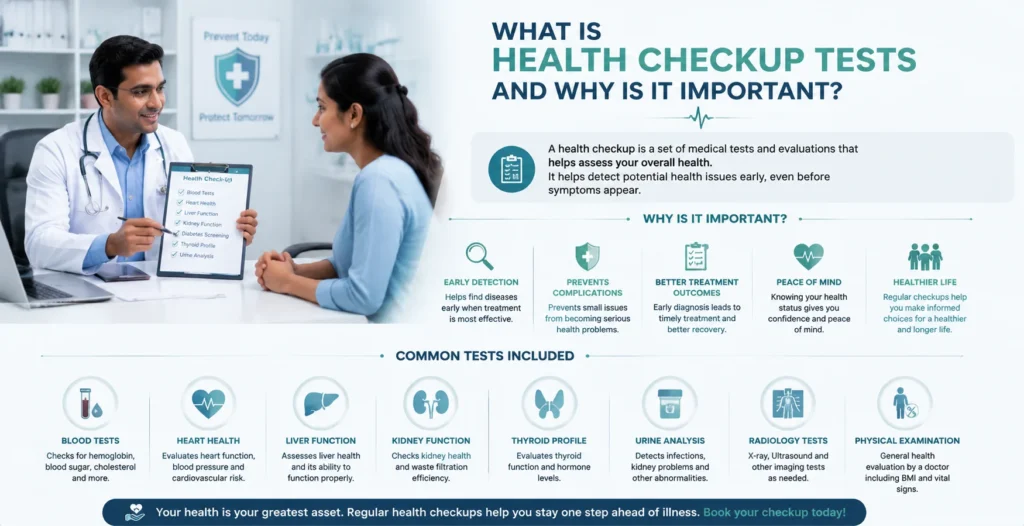
What Is Health Checkup Tests and Why Is It Important?
Health Checkup does not mean that one has to go through all necessary tests. Health Checkup means a possibility to evaluate your health condition, examine your personal habits, and discuss the prevention methods with a specialist who can give some useful recommendations.
Instead of approaching the visits to doctors with the idea that they are needed only if there are problems with health, one should try to use checkups in order to prevent possible diseases.
Understanding Preventive Health Checkups
The purpose of a preventive health checkup is monitoring of your general state of health before any specific problems. This kind of checkup involves physical examination, laboratory test, and discussion of your habits, family background, etc. Regular preventive health checkup evaluations help you stay ahead of potential issues.
Instead of waiting until you’re unwell, routine health checkup screenings and regular age wise health screening help create a clearer picture of your health over time.
Why Age-Based Screening Is Important
Health priorities naturally change with age. What may be appropriate during your 20s might differ from the screenings recommended in your 40s or 50s.
That’s why age wise health screening helps healthcare providers recommend health checkup tests that are more relevant to your current stage of life rather than following a one-size-fits-all approach. Full body health checkup plans differ by age.
Benefits of Routine Health Monitoring
Scheduling a routine health checkup offers several practical benefits beyond simply completing medical tests. Health checkup tests provide real value to your preventive care strategy.
It can help you:
- Monitor changes in your health over time.
- Discuss lifestyle habits with your doctor.
- Understand routine test results.
- Plan future preventive care.
- Make informed health decisions.
Routine health check-ups and tests usually give a more accurate picture than reacting when the signs start showing up.
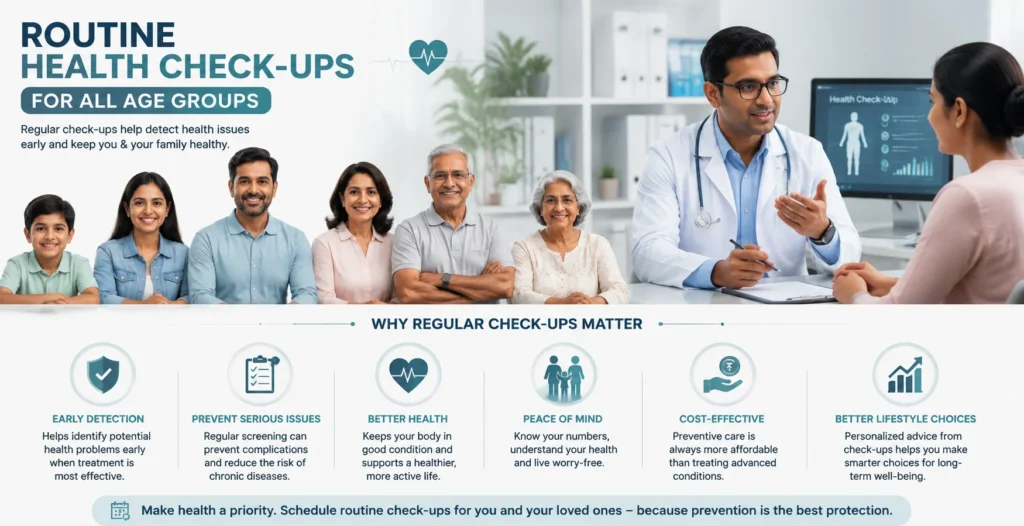
Routine Health Check-Ups For All Age Groups
No one-size-fits-all rule for health check-up tests exists. The health check-up tests you will need during a preventive health check-up or a full body health check-up depend on factors such as age, medical history, lifestyle, and your physician’s advice.
The following are some of the things covered by most routine health checkup tests.
Health Check-Ups In Your 20s
Your 20s is usually the right age for building healthy habits and creating a foundation for future health checkups. Most health checkup tests during this stage focus on general wellness. Starting routine health checkup visits now matters.
Common assessments may include:
- Physical examination
- Blood pressure monitoring
- Height, weight, and BMI assessment
- Basic blood tests
- Lifestyle discussion
A preventive health checkup during this decade helps you understand your current health while encouraging long-term healthy habits. Health checkup tests at this age set your baseline.
Health Checkups in Your 30s
As work, family responsibilities, and lifestyle changes increase, many people choose more regular health evaluations. Routine health checkup frequency often increases here.
A routine health checkup in your 30s may commonly include:
- Blood sugar evaluation
- Cholesterol profile
- Blood pressure monitoring
- General physical assessment
- Lifestyle-related discussions
Depending on your medical history, your healthcare provider may recommend additional health checkup tests that suit your individual needs. Age wise health screening becomes more personalized.
Health Checkups in Your 40s
Your 40s are often when preventive care becomes an even greater priority. Routine monitoring and age wise health screening help track changes that naturally occur over time. Full body health checkup procedures expand now.
A full body health checkup may include:
- Comprehensive physical examination
- Blood pressure assessment
- Blood tests as advised
- Heart health evaluation
- Preventive screening discussions
Rather than following the same checklist every year, your doctor may personalize your age wise health screening based on family history and lifestyle factors. Health checkup tests get tailored here.
Health Checkups in Your 50s and Beyond
As you grow older, healthcare often shifts toward more comprehensive monitoring and preventive discussions. Full body health checkup importance increases significantly.
A Health Checkup during this stage may include:
- Detailed physical examination
- Routine laboratory testing
- Age-appropriate screening recommendations
- Ongoing health monitoring
- Preventive consultation
The exact health checkup tests included in a full body health checkup will always depend on your personal health profile and your healthcare provider’s recommendations. Routine health checkup schedules become more frequent.
Common Health Checkup Tests Included Across Age Groups
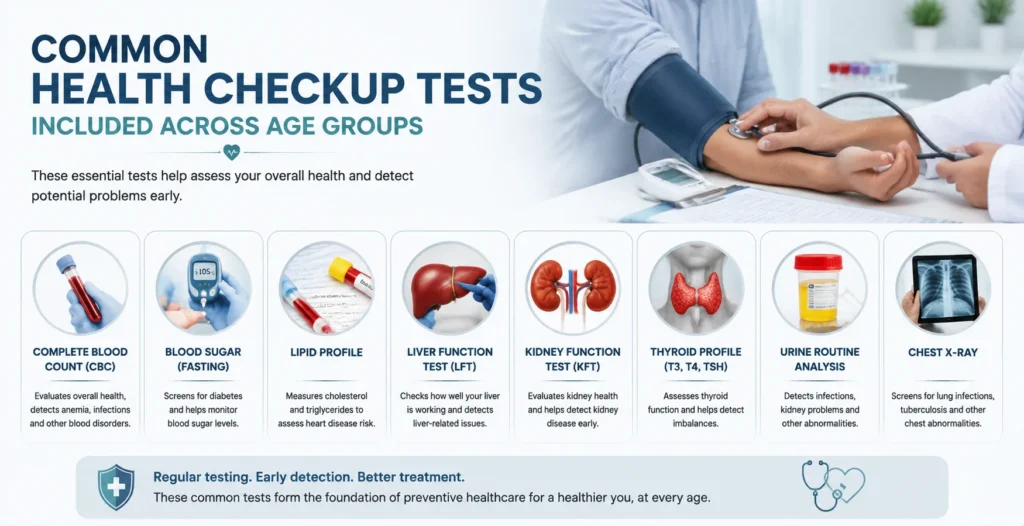
Although recommendations vary, several health checkup tests are commonly included regardless of age. These standard health checkup tests appear in most preventive health checkup plans.
Vital Sign Assessments
These basic measurements provide an overview of your current health status and are usually performed during most routine health checkup appointments. Age wise health screening always includes these.
They often include:
- Blood pressure
- Height and weight
- BMI calculation
- Pulse rate
- Temperature (when required)
Laboratory Tests
Many preventive health checkup plans include routine laboratory investigations based on age and individual health needs. Health checkup tests ordered depend on your specific situation.
These may include:
- Complete blood count (CBC)
- Blood sugar testing
- Lipid profile
- Basic metabolic evaluation
- Other tests recommended by your physician
Physical and Clinical Evaluation
It is important to note that communication with your doctor is as important as the laboratory results.
In this visit, your doctor will likely discuss your medical history, your way of life, perform the physical examination, and plan out when your next routine health checkup is due.
How Frequently Should You Plan for Your Health Checkup Tests?
There is not one perfect number. The frequency of your health checkups is dependent on your age, lifestyle, family history, and recommendations from your doctor.
Annual Health Checkups
Generally speaking, an annual health checkup is a great and pragmatic solution for most adults. In addition to this, it allows for your doctor to discuss your medical history, lifestyle, and order the necessary additional tests.
Risk-Based Checkup Frequency
There are certain people who have to visit their doctors more often. Their current state of health or lifestyle, as well as some diseases in the family history, might make your physician recommend a more frequent examination.
Follow-Up Visits
Getting your tests done isn’t the finish line for a Health Checkup. Sitting down with a healthcare professional to go over the results is what helps you make sense of them and plan whatever comes next.
Factors That Influence Your Health Checkup Plan
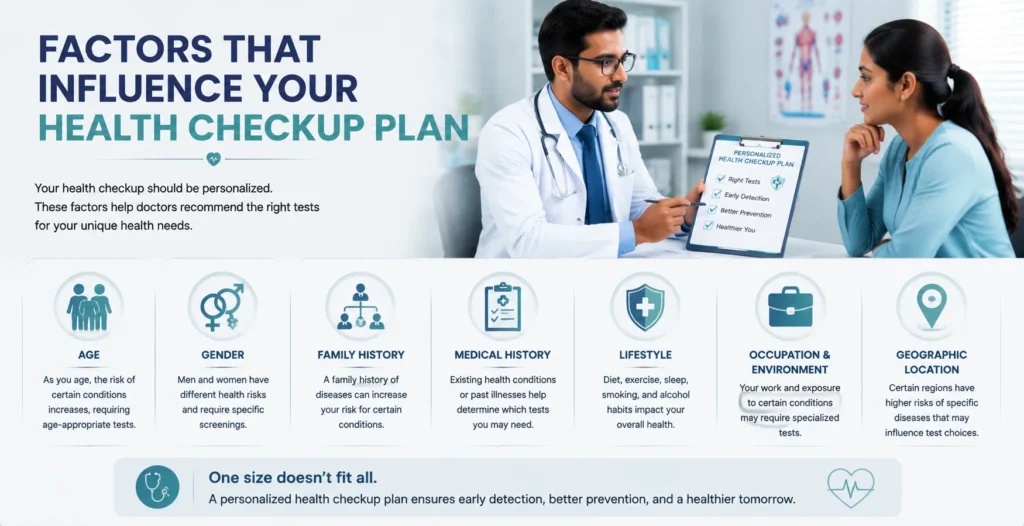
No two people need exactly the same things from a checkup. That’s why a Health Checkup is usually built around you, not pulled from a generic checklist.
Age and Daily Lifestyle
The way you live day to day has a real say in which health checkup tests make sense for you. How active you are, what you eat, how you sleep, your stress levels, and even your job often factor into these evaluations.
Family Health History
Your family’s medical background adds important context to age wise health screening. Letting your doctor know about health issues among close relatives helps them zero in on screenings that are relevant to you.
Existing Medical Guidance
If you’re already under a doctor’s care or taking prescribed medication, they may put together a more personalized full body health checkup plan around your ongoing treatment.
Preparing for a Routine Health Checkup
A bit of prep beforehand can make your appointment go smoother and help you get more out of your Health Checkup.
Schedule Your Appointment in Advance
Pick a date that works for you, and follow any instructions your provider gives, especially around fasting or other prep steps needed before certain health checkup tests.
Bring Relevant Information
Bringing along old medical reports, a list of your prescriptions, or vaccination records gives your doctor a fuller picture of your history and makes changes easier to spot over time.
Ask Questions During Your Visit
A preventive health checkup is also your chance to actually learn something. Go ahead and ask why a test was recommended, what your results mean, or when you should come back for your next one.
Health Tip
Holding onto a personal record of your past checkup results makes it easier to track how your health has changed over the years and talk it through with your doctor.
Common Mistakes People Make During Health Checkup Tests
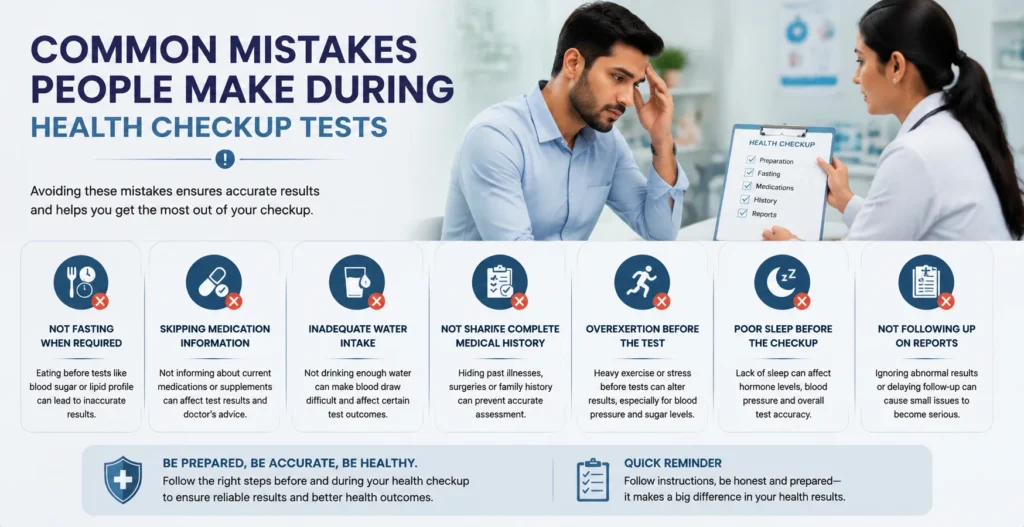
Health Checkup can only be effective when it is regarded as something routine rather than something you do now and then.
Delaying Testing Until Illness
The thing is that many people choose to undergo a health check up only when they already feel sick. However, this process is all about prevention, which makes such check ups important in the long term.
Skipping Follow-Up Reviews
Getting your results back is only half the job. Talking them through with your healthcare provider is what helps you understand what they mean and whether you need any next steps.
Ignoring Lifestyle Discussions
Blood tests aren’t the only things that happen during a Health Checkup. Discussing such aspects as sleep, nutrition, physical activity, stress, and your daily routine can help your physician get a clearer picture about your condition than any statistic can do.
When Should You Consider Speaking with a Doctor?
There are several situations in which you should not postpone visiting a doctor until the next scheduled appointment.
General Changes in Your Health Status
Any change in your health that is persistent should be discussed with a certified health practitioner instead of waiting for your next health checkup.
Family History Considerations
If certain conditions run in your family, bring it up with your doctor. It could shape when they recommend your next round of age wise health screening.
Routine Preventive Visits
Even during periods when everything seems alright, preventive health checkup appointments will allow you to monitor your health and have a constant platform where you can discuss your health status.
Why Preventive Health Checkups Continue to Matter
Preventive health care entails staying informed rather than being reactive in situations when things have gone out of hand. Through consistent health checkup appointments, you get a better picture of your health status.
Some of the long-term advantages include:
- Improved health awareness: Monitoring your health status through frequent evaluations.
- Supports long-term planning: Build healthier routines with guidance suited to your needs.
- Personalized healthcare: Age-wise health screening makes it possible to receive health screening recommendations relevant to your life phase.
- Informed decision-making: Routine appointments help you better understand your health status and future expectations.
Conclusion
Health Checkup is an important part of your healthy life at any age. Even though the type of health checkup test varies depending on your age, regular preventive screenings ensure that you are better aware of your health and have much more information to talk about with your doctor.
No matter whether it is your first preventive health checkup or the next full body health checkup, the correct strategy should be based on your age, lifestyle, health history, and professional advice. If you haven’t had such screening for some time, it might be useful to contact your doctor and develop a screening plan around your long-term health goals. Yello Medi offers convenient health checkup packages to help you stay proactive about your health at every stage of life.
Frequently Asked Questions (FAQs)
What is included in a routine health checkup?
A regular health examination will normally contain a physical examination, blood pressure, general health tests, and consultation.
When should preventive health examinations begin?
A preventive health examination may begin during early adulthood as the age-wise health screening changes over time.
How frequently should I conduct a full body health examination?
A full body health examination is conducted according to age and advice from medical practitioners.
Are health checkups different for each age group?
Yes. Each age category has its own Health Checkup program.
What kind of health tests can I expect during preventive health screenings?
The following are some of the health checkup tests conducted. They include Blood test, Blood Pressure Test, BMI Test, and Physical Examination.