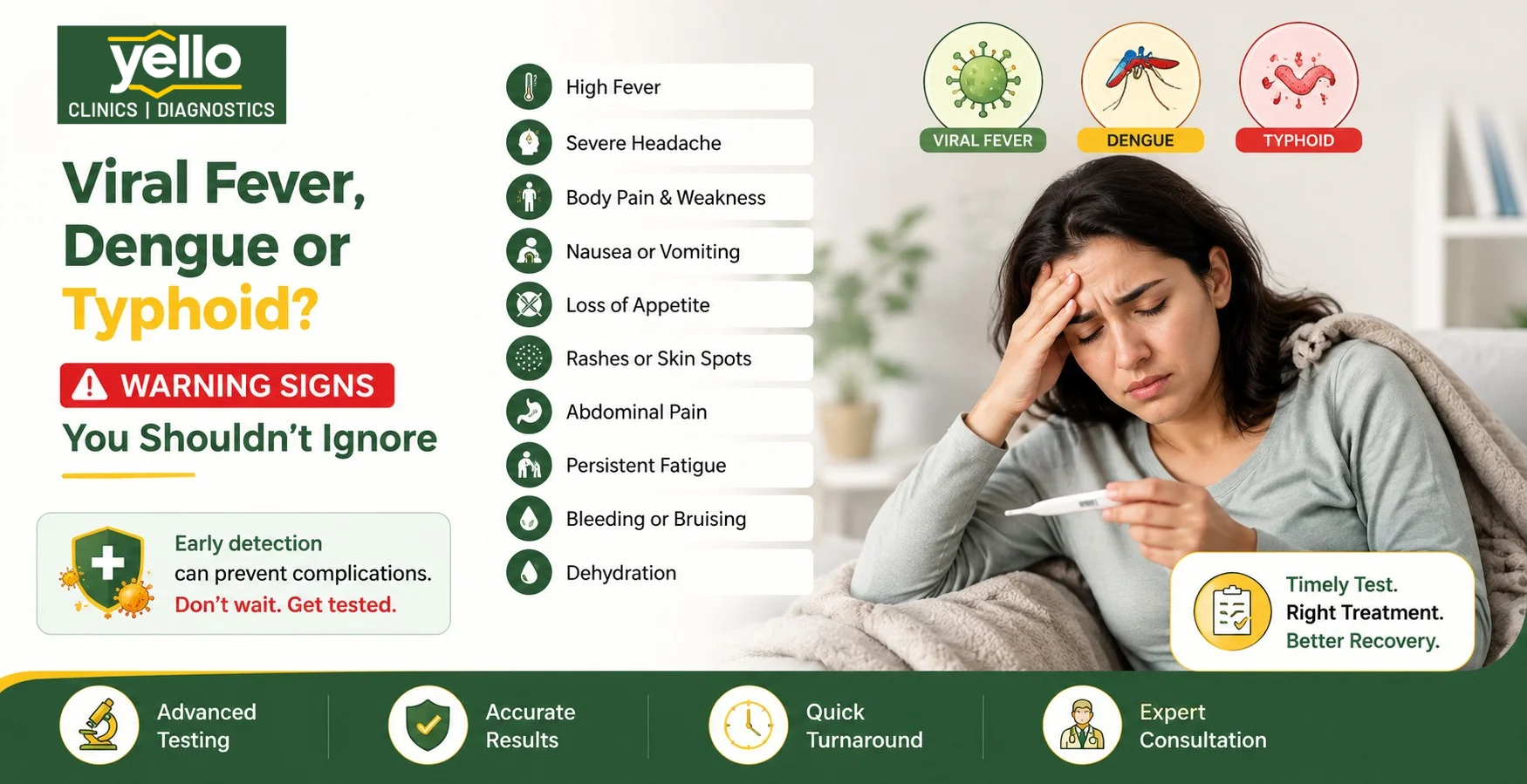
The seasonal changes in Hyderabad usually lead to an increase in the number of fever cases. Everything seems fine, out of nowhere the very next day everyone around you is down with some or the other flu-like symptoms such as fever, body aches and tiredness.
It usually starts small. You notice viral fever symptoms like mild fever, weakness, or body ache and feel that it is something manageable at home. But here is the catch, the same very early signs can also be dengue symptoms or typhoid symptoms.
And therein lies the confusion.
Most assume it is merely a seasonal fever that will go away by the winter break. Sometimes it does. But sometimes it doesn’t, and waiting too long can delay the right treatment.
This is why it matters to notice viral fever symptoms early and know when they can be something more serious.
What Is a Viral Fever?
Viral fever is nothing but the natural reaction of your body to the virus present inside it. When the virus attacks your body, the immunity level increases the temperature of your body to counteract the virus.
It may not be comfortable for you but it is just how your body works.
Methods of transmission:
- Coughing and sneezing
- Contacting with contaminated surfaces and touching your face
- Sharing the same food items or drink
- In congested enclosed areas
That explains why viral fever symptoms spread rapidly, especially during seasonal changes.
Duration of recovery process:
Viral fever symptoms generally last about 5 to 7 days. Simple viral fever treatment will see you recover gradually after a few days.
Common Viral Fever Symptoms

Viral fever symptoms don’t come alone, they usually affect your whole body.
What you’ll notice:
Fever
Not always very high, but enough to make you feel constantly warm and uncomfortable.
Body pain
Your muscles become sore as if your body is exhausted without exerting much physical effort.
Weakness
You have a feeling of being low on energy and find even easy tasks tiring.
Sore throat
You have an irritated throat or one that causes slight pain when swallowing.
Cough
You experience a mild or a dry cough that persists for some days.
Headache
You have a dull or persistent headache that makes concentration difficult.
Fatigue
You’re more tired than you used to be and want to rest.
In general, the discomfort caused by viral fever symptoms can be greatest while having a cold. Generally, these usually get better on their own with simple viral fever treatment.
What Is Dengue Fever?
Unlike viral fever, dengue also involves a virus; however, this type of illness is transferred through mosquitoes.
Only a single bite from an infected Aedes mosquito can cause dengue symptoms.
Why dengue cases increase during monsoon:
- Water collects in open spaces
- Mosquito breeding increases
- Exposure happens during the day
That is why dengue symptoms are more commonly reported during rainy seasons.
Common Dengue Symptoms
Dengue symptoms have a greater intensity compared to symptoms caused by viral fever, and the difference can be noticed easily.
How it feels:
High fever
It comes suddenly and rises quickly, often making you feel extremely unwell.
Severe body pain
The pain is much stronger, your body feels heavy and sore at the same time.
Joint pain
Movement feels uncomfortable because joints start aching.
Skin rash
Red spots or patches may appear and spread across your skin.
Eye pain
An unpleasant feeling lurks inside your eyes, particularly when you shift them around.
Nausea
You might have an uneasiness, and nausea is often seen as the next step from here.
Platelet problems
The scary bit is that there could be fewer platelets in your body, making it prone to bleeding.
Symptoms associated with Dengue are sharp, and more obvious than the signs of viral fever.
What Is Typhoid?
Typhoid is an illness caused by bacteria and not viruses like in the case of a viral fever.
This explains why viral fever treatment does not treat typhoid symptoms.
How it spreads:
- Eating contaminated food
- Drinking unsafe water
- Poor hygiene
Why it’s different:
Typhoid symptoms don’t improve on their own. Without proper treatment, they continue and can get worse.
Common Typhoid Symptoms

Typhoid symptoms don’t hit suddenly, they build slowly and stay longer.
What you’ll experience:
Persistent fever
The fever doesn’t go away easily and stays for days.
Stomach pain
You feel discomfort or heaviness in your abdomen.
Weakness
Your energy levels stay low, even after rest.
Digestive issues
You may have constipation or diarrhea, and digestion feels off.
Loss of appetite
You don’t feel like eating, even when you should.
Headache
A steady headache adds to the discomfort.
What makes it different:
- You don’t feel better after a few days
- Symptoms stay consistent
- Recovery feels slow without treatment
Unlike viral fever symptoms, typhoid symptoms don’t settle on their own.
Viral Fever vs Dengue vs Typhoid
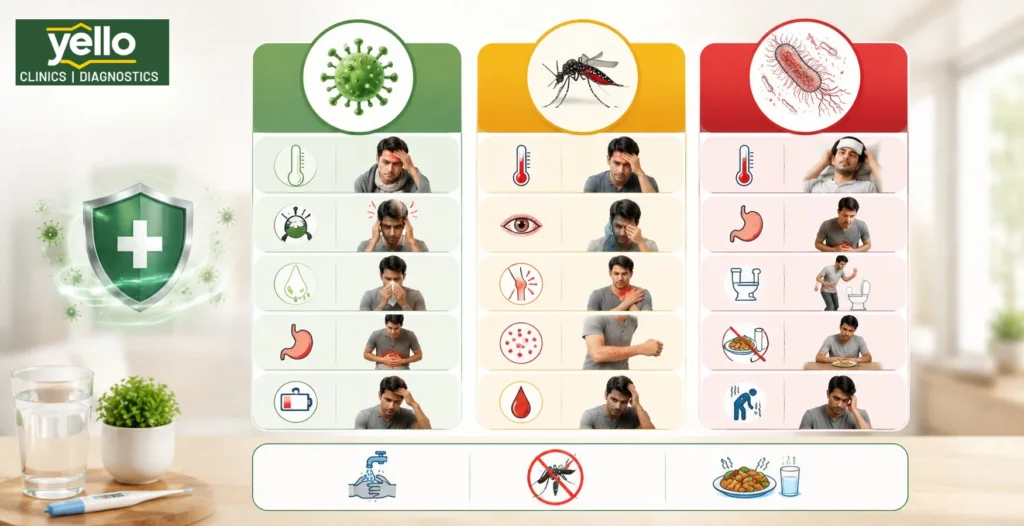
Factor | Viral Fever Symptoms | Dengue Symptoms | Typhoid Symptoms |
Cause | Virus | Mosquito virus | Bacteria |
Symptoms | Mild | Severe | Persistent |
Fever | Gradual | Sudden | Continuous |
Duration | 5–7 days | 5–7 days | Longer |
Treatment | Viral fever treatment | Supportive care | Antibiotics |
Warning Signs You Should Not Ignore
Sometimes viral fever symptoms are not the real issue.
Watch for these:
Very high fever
If your fever is too high and not reducing, it’s not something to ignore.
Breathing difficulty
Trouble breathing needs immediate attention.
Continuous vomiting
This can quickly lead to dehydration.
Severe weakness
If you can’t move or function properly, it’s serious.
Bleeding symptoms
Any signs of bleeding should be checked immediately.
Dehydration
Dry mouth, dizziness, or low urine are warning signs.
Confusion or dizziness
Feeling disoriented is not normal and needs medical help.
These are not typical viral fever symptoms. They could indicate serious dengue symptoms or typhoid symptoms.
Pay attention to your body. If viral fever symptoms don’t improve, don’t guess, get checked. The right diagnosis and timely viral fever treatment can make recovery much easier and safer.
When Should You Get Tested?
One of the most common mistakes people make is waiting it out. You think it’s just viral fever symptoms, give it a couple of days, and hope it passes. Sometimes it does. But sometimes, those same symptoms turn out to be dengue symptoms or even typhoid symptoms.
That’s where timing really matters.
You should seriously consider testing if:
Fever lasts more than 2–3 days
Viral fever symptoms usually peak and start improving by this time. If not, something else could be going on.
Body pain feels unusually intense d PCOS?
Normal viral fever symptoms cause mild discomfort. Sharp, severe pain often points toward dengue symptoms.
You feel completely drained
There’s a difference between tired and completely exhausted. If your energy levels are extremely low, don’t ignore it.
Platelet levels are a concern
Dengue symptoms can silently reduce platelets, which can become dangerous if not monitored.
Digestive issues continue
If you’re dealing with stomach pain, loss of appetite, or irregular digestion, it could be typhoid symptoms rather than viral fever symptoms.
At the end of the day, getting tested early is always better than guessing. It helps you get the right viral fever treatment or the correct care for dengue symptoms and typhoid symptoms.
Tests Commonly Recommended
Doctors don’t rely on assumptions, they confirm things properly. Based on your symptoms, they’ll guide you toward the right tests.
Commonly recommended tests:
CBC Blood Test
Gives a basic overview of infection and immunity.
Dengue Test
- NS1 antigen for early detection
- ELISA for confirmation of dengue symptoms
Typhoid Test
- Blood culture
- Typhidot test for typhoid symptoms
Platelet Count
Especially important when dengue symptoms are suspected.
CRP Test
Helps differentiate between viral fever symptoms and bacterial infections like typhoid symptoms.
If you’re unsure where to begin, going for a Dengue or Typhoid test in kokapet can help you get everything checked properly in one go.
You can also ask for a full body checkup test list to get a broader picture of your health. In some cases, an mpv blood test helps understand platelet behavior better. And if recovery feels slow, checking for the 14 signs of vitamin d deficiency can give useful insights. For overall health routines, many people even look up the best dental clinic near me as part of maintaining general wellness.
How to Prevent Viral Infections and Seasonal Fevers
Admit it, no one wants to face precautions or symptoms of viral fever, dengue, typhoid if they can prevent it. It is easily preventable, but it requires use consistently.
What actually helps:
- Maintain good hygiene
- Wash your hands frequently
- Do not touch your face
- Keep your environment clean
In this way, you can prevent viral fever symptoms from spreading.
- Drink safe water
- Always choose filtered or boiled water
- Avoid outside water sources
This protects you from typhoid symptoms.
- Protect yourself from mosquitoes
- Use repellents
- Avoid stagnant water nearby
- Wear full sleeves when needed
This directly reduces your risk of dengue symptoms.
- Stay hydrated
- Consume enough liquid every day
- Maintain balance in your body
Proper hydration helps in recovering from viral fever-related symptoms.
- Eat well
- Fruits, vegetables, proteins in your diet
- Build immunity naturally
A strong immune system helps your body handle viral fever symptoms, dengue symptoms, and typhoid symptoms much better.
- Don’t delay medical help
- If something feels off, get it checked
- Don’t rely only on home remedies
- Do not depend entirely on home remedies
It ensures that there is effective treatment of viral fever to prevent the condition from worsening.
Conclusion
Ultimately, all fevers are different; thus, taking the same measures when dealing with them may prove futile.
The signs and symptoms caused by viral fever are not always serious, and they can easily be managed using viral fever treatment measures along with enough rest. However, the symptoms resembled between dengue and typhoid. They require attention, workup, and in some cases emergent treatment.
The smartest thing you possibly do is:
- Pay attention to your body
- Recognize warning signs
- Get tested when needed
Don’t brush off symptoms or take illness for granted. If diagnosed early and treated effectively with right viral fever treatment, the recovery would be fast, easy and much safer.
YelloMedi is about assisting health care providers to deliver the right information at the right time to patients. They ensure you act in hours not days dealing with swine flu symptoms, viral fever symptoms or dengue fever symptoms by increasing visibility and access to trusted care when seeking medical advice.
Frequently Asked Questions
How do I know whether my fever is viral or dengue?
Test yourself, because the symptoms of viral fever are mild and gradual in onset but dengue has a sudden onset with high grade fever, pain in body and rashes.
What are the alerts for dengue?
If you have dengue, you may experience high fever, severe pain, rash, eye pain, nausea and low platelets which influences bleeding or extreme weakness and needs to be treated instantly.
How long will my viral fever take to clear?
It takes around 5 to 7 days for the symptoms to clear, beyond that it’s better to get yourself tested.
Can typhoid start like normal fever?
Yes, typhoid symptoms can feel like normal fever at first but worsen over time, fever beyond a week may not be just viral fever symptoms.
When should I get a blood test for fever?
Undergo tests when you exhibit severe and progressive symptoms, or the fever continues after 3 days since viral fever symptoms subside after that.